

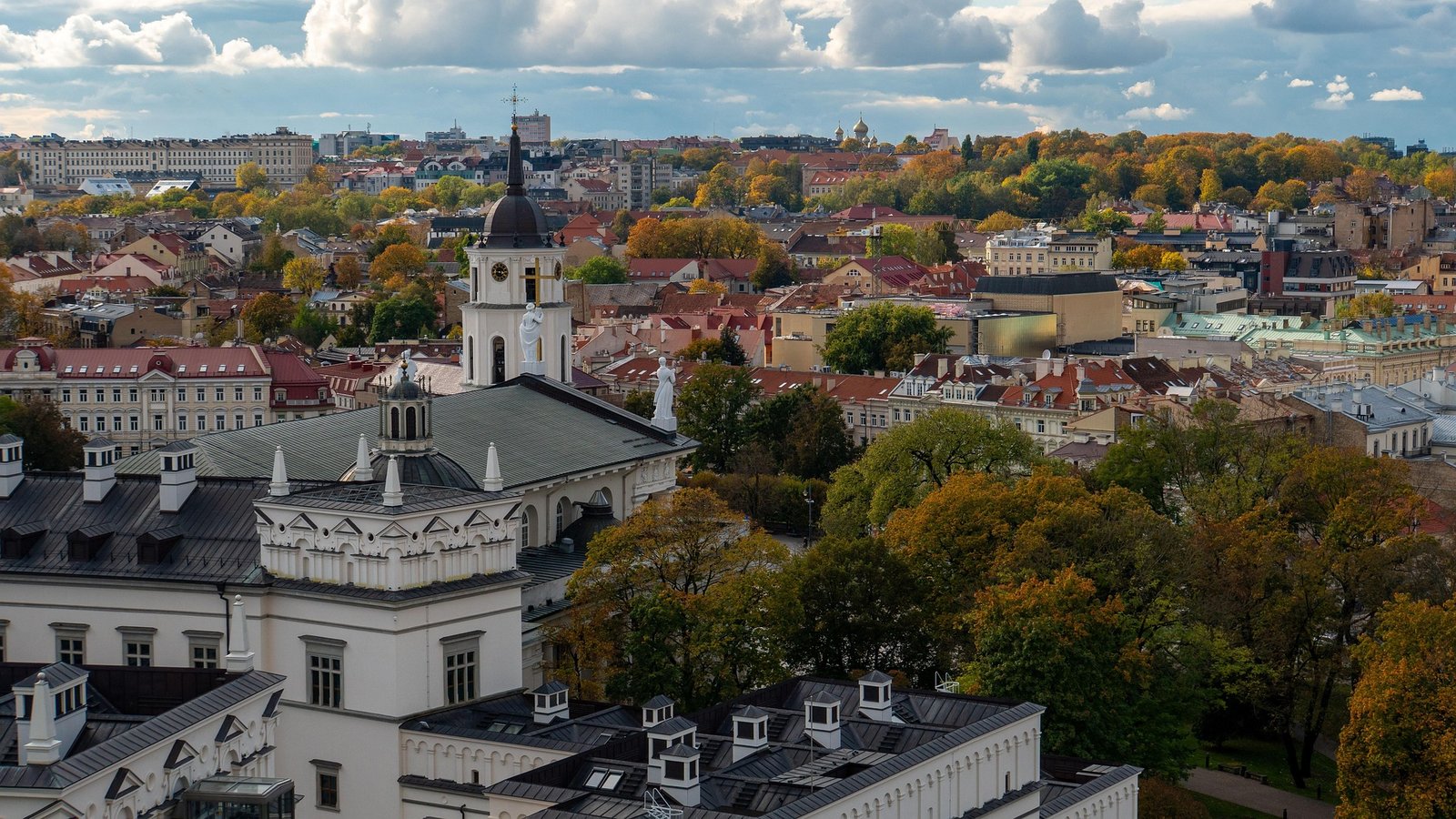
Lithuania’s capital doesn’t try too hard to impress. It simply does. Behind its church towers, cobbled streets, and colorful facades lies a city full of surprises, hidden stories, quirky traditions, and fascinating history.
In Vilnius, you’ll find one of Europe’s largest Old Towns, an independent republic run by artists, more churches than you can count, and enough hidden courtyards to keep you exploring for days.
The best part? Vilnius is incredibly easy to explore. Most attractions are within walking distance, prices remain friendly compared to many Western European capitals, and the city still feels authentic rather than overcrowded.
If you’re wondering what makes Vilnius special, these interesting and fun facts about Vilnius will help you understand why so many visitors leave pleasantly surprised.
Vilnius Has One of the Largest Old Towns in Europe
Getting lost in Vilnius Old Town is not a mistake — it’s one of the best things you can do.
Covering almost 4 square kilometers, Vilnius Old Town is one of the largest surviving medieval old towns in Europe and has been recognized as a UNESCO World Heritage Site.
What makes it special isn’t just its size. Every street seems to tell a different story. One moment you’ll be standing in a lively square surrounded by restaurants and cafés, and a few minutes later you’ll discover a quiet alley where time appears to have stopped centuries ago.
Don’t rush through it.
Take your time, wander without a plan, and allow yourself to turn into streets you hadn’t intended to visit. Some of the most memorable places in Vilnius aren’t marked on tourist maps.
“The best way to discover Vilnius is often to stop following the plan.”
Vilnius Is Called the Jerusalem of the North
Few visitors know that Vilnius was once one of Europe’s most important Jewish cultural and religious centers.
For centuries, the city attracted scholars, rabbis, writers, and merchants from across Europe. Its influence became so significant that Vilnius earned the nickname “Jerusalem of the North.”
Although much of this history was tragically interrupted during World War II, traces remain throughout the city today.
Walking through the former Jewish Quarter reveals a deeper side of Vilnius that many tourists never expect. Memorials, historical sites, and preserved streets tell the story of a community that helped shape the city’s identity for generations.
It’s one of the reasons Vilnius feels far more multicultural and layered than many visitors anticipate.
There Are Churches Everywhere
Locals sometimes joke that there are more churches than supermarkets in Vilnius.
While that may not be entirely true, it certainly feels that way.
As you walk through the city center, church towers seem to appear around every corner. Gothic, Renaissance, Baroque, and Neoclassical styles all coexist within a relatively small area.
One church that should never be missed is St. Peter and St. Paul’s Church. From the outside, it looks elegant but relatively modest. Step inside, however, and you’ll discover one of the most impressive church interiors in Europe, decorated with more than 2,000 white stucco sculptures.
Even travelers who aren’t particularly interested in religion are often left speechless.
Napoleon Was Amazed by Vilnius
History lovers will enjoy this one.
When Napoleon’s army passed through Vilnius in 1812, he reportedly became so impressed by St. Peter and St. Paul’s Church that he wished he could place it in the palm of his hand and take it back to Paris.
Whether the quote is entirely accurate or not, it has survived for more than two centuries.
And after seeing the church yourself, you’ll probably understand why.
Vilnius has a habit of exceeding expectations. Many visitors arrive expecting a small Baltic capital and leave wondering why it isn’t talked about more often.
Užupis Has Its Own Constitution
Yes, really.
Across a small bridge from the Old Town lies Užupis, one of Vilnius’ most unique neighborhoods.
In 1997, local artists declared it an independent republic. Today, Užupis has its own constitution, flag, president, and national day celebrated every April 1st.
Its constitution includes wonderful statements such as:
“Everyone has the right to be happy.”
“Everyone has the right to be unhappy.”
The neighborhood itself is full of galleries, murals, sculptures, cozy cafés, and creative energy.
If Vilnius has a soul, many would argue that it lives in Užupis.
Vilnius Is Surprisingly Green
Many first-time visitors expect a dense urban capital.
Instead, they’ll find forests, rivers, parks, and green spaces almost everywhere.
Nearly half of Vilnius is covered by green areas, making it one of the greenest capitals in Europe.
A short walk from the city center can take you into nature trails, riverside paths, or panoramic viewpoints overlooking the city.
This unique balance between city life and nature is one of the reasons Vilnius feels relaxed compared to many larger European capitals.
The City Is Built on Seven Hills
Like Rome, Vilnius was built among hills.
This means spectacular viewpoints are never far away.
Gediminas Hill is the most famous, offering panoramic views of red rooftops, church towers, and the modern skyline beyond.
However, several lesser-known viewpoints are equally rewarding.
Climbing a hill in Vilnius rarely feels like hard work, and the views almost always justify the effort.
Vilnius Is One of Europe’s Most Walkable Capitals
Forget rental cars.
Forget complicated transport systems.
Vilnius is one of the easiest capitals in Europe to explore on foot.
Many of the city’s most famous attractions sit within a relatively compact area. You’ll often find yourself walking from a medieval church to a modern art gallery, then to a lively square, all within a few minutes.
This creates a much more personal travel experience.
The city reveals itself slowly, one street at a time.
Hidden Courtyards Are Everywhere
One of Vilnius’ best-kept secrets sits behind ordinary-looking doors and archways.
Hidden courtyards.
Throughout the Old Town, you’ll find small private spaces filled with flowers, artwork, fountains, cafés, and local character.
Many visitors walk right past them without ever noticing.
That’s why looking up, slowing down, and occasionally stepping through an open gate can completely change your experience of the city.
Some of Vilnius’ most charming corners are hidden in plain sight.
The Vilnius TV Tower Is Taller Than the Eiffel Tower
Here’s a fact that surprises many visitors.
The Vilnius TV Tower stands at 326.5 meters, making it taller than the Eiffel Tower.
Its observation deck offers incredible views across the city and surrounding forests.
On clear days, the view stretches for miles.
It’s also one of the most important symbols of Lithuania’s fight for independence, making it significant not only architecturally but historically as well.
Vilnius Changes Completely With the Seasons
Some cities feel similar year-round.
Vilnius does not.
Winter transforms the city into a Christmas postcard filled with lights, markets, and snow-covered rooftops.
Spring brings blooming parks and outdoor terraces.
Summer fills the streets with festivals, concerts, and open-air events.
Autumn paints the city in shades of gold, orange, and red.
Each season reveals a different side of Vilnius, which is why many travelers end up returning more than once.
You Can Experience Real Local Life Here
Perhaps the most interesting fact about Vilnius isn’t historical at all.
It’s how authentic the city still feels.
Despite growing tourism, Vilnius remains a place where locals genuinely live, work, study, and socialize in the city center.
You’ll still discover neighborhood bakeries, local markets, hidden cafés, and everyday life unfolding naturally around you.
That authenticity is becoming increasingly rare in Europe.
And it’s one of the biggest reasons why Vilnius leaves such a strong impression.
Vilnius may not be Europe’s most famous capital, but it might just be one of its most rewarding.
Between its medieval streets, fascinating history, artistic neighborhoods, hidden courtyards, impressive churches, and welcoming atmosphere, the city offers far more than most visitors expect.
Whether you’re visiting for a weekend or planning a longer stay, Vilnius has a way of surprising you.
Not through giant landmarks or flashy attractions, but through countless small discoveries that make exploring genuinely enjoyable.
And perhaps that’s exactly what makes Vilnius so special.